

A soybean plant will readily abort a flower that isn’t properly fertilized. It will drop pods or fruits damaged by insects, hail, wind, or disease so they can redirect energy to healthier ones. It prefers to concentrate its limited resources on flowers that have a higher chance of success. Soybean plants constantly adjust their fruit and pod load to match the resources available (water, nutrients, and energy), ensuring the surviving pods receive enough nutrition for strong seed development and survival.
To obtain the highest possible yield from every acre, we must give the soybean plant everything it needs, especially during the critical flowering period, so it can set and retain far more pods than it would under stress.
Soybean Pod Set: Understanding the Factors That Limit Yield Potential
Soybeans have an impressive reproductive capacity, often producing many more flowers than they can carry to maturity. In typical field conditions, plants abort 50–70% of their flowers and young pods. This built-in “survival strategy” helps the crop endure tough conditions, but it also makes pod number per acre one of the most important, and most vulnerable, yield components. Preventing early stress and supporting the plant during the key reproductive stages (R1 through R5) consistently delivers the highest returns.
Critical Timing: The Reproductive Window
Pod set and retention are most sensitive from beginning bloom (R1) through beginning seed (R5). During this window, the plant is rapidly developing flowers, setting pods, and starting to fill early seeds. Stress at this time directly reduces pod numbers.
Primary Factors Affecting Pod Set and Retention
1. Environmental stress
Drought can dramatically affect flower fertilization and pod formation dramatically. Limited water reduces photosynthesis and cuts off the sugar supply to developing flowers and pods, triggering abortion, especially of younger ones.
2. Nutrient Availability and Uptake
Deficiencies in potassium, phosphorus, boron, and calcium can lead to poor flower development, weak pod walls, and higher abortion rates.
3. Pests and Diseases
Insects feed on developing pods and seeds, causing abortion, flat pods, or shriveled seeds. Foliar diseases and root problems reduce overall plant vigor and photosynthetic capacity, leaving fewer resources available for pod retention.
4. Management and Plant Architecture
- Plant density and canopy closure: Overly dense stands can limit light penetration to lower nodes, leading to early leaf senescence and fewer pods in the lower canopy.
- Overall plant health: A robust root system and healthy foliage improve nutrient and water uptake while supporting strong photosynthesis.
Supporting Pod Set with Targeted Nutrition and Biostimulants
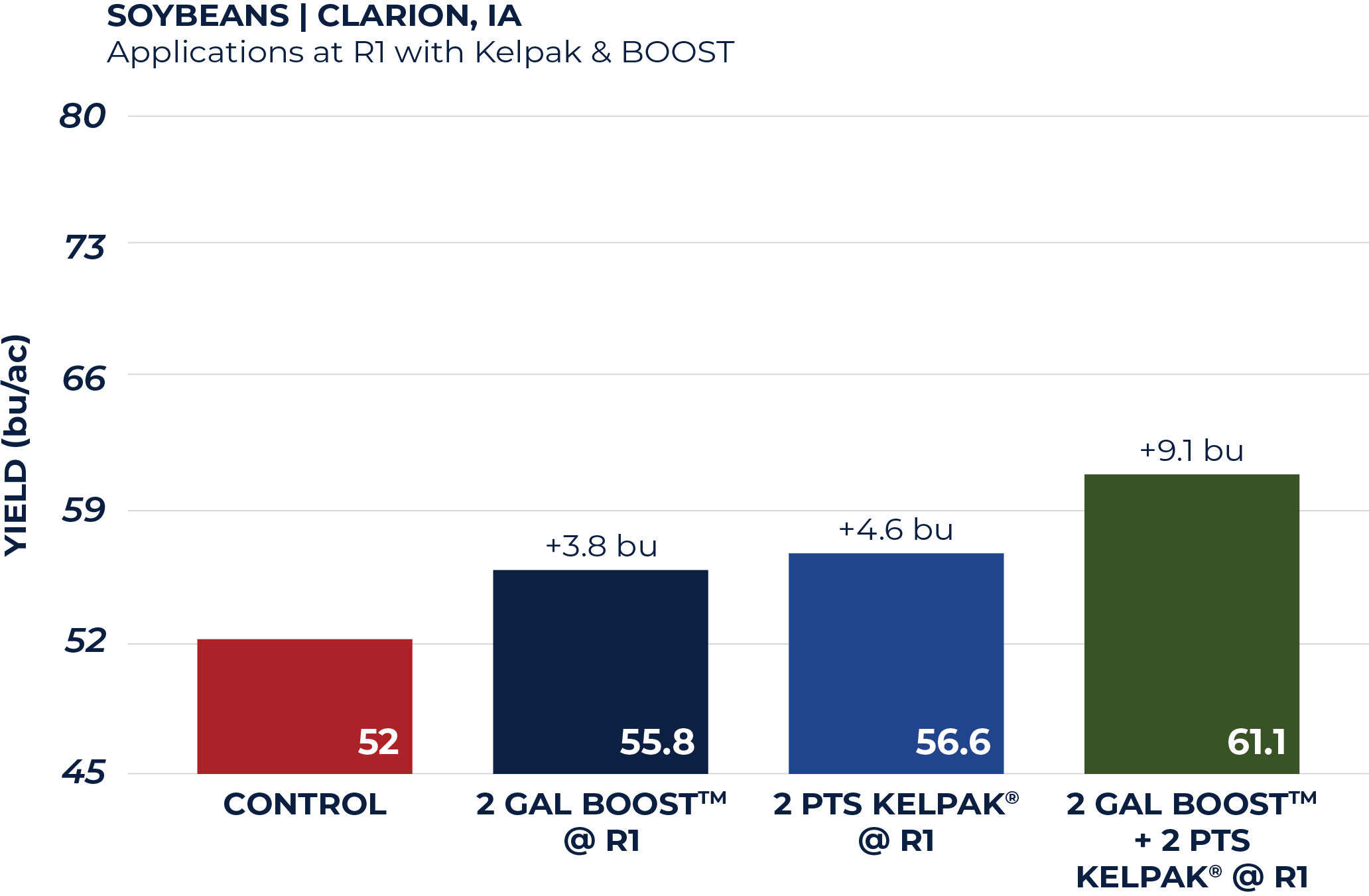
Modern agronomic tools can help reduce these stresses and improve pod retention. Foliar applications of biostimulants and targeted nutrients applied from early flowering onward have shown the ability to improve yield when the crop needs support most.
QLF’s L-CBF BOOST™
L-CBF BOOST™ is a liquid carbon-based fertilizer (L-CBF) built on high-quality sugar cane molasses. It delivers readily available carbon energy (approximately 30% sugars) along with micronutrients already present in molasses.
During the critical early reproductive stages (R1–R3), soybeans have an enormous demand for energy to support flowering, pollination, and pod set. BOOST™ applied at 1–2 gal/ac supplies sugar and micronutrients from sugarcane molasses to support these processes. This extra energy helps maintain photosynthesis and sugar transport to developing flowers and pods, especially during periods of drought or heat stress when natural sugar production slows. The carbon and low pH chemistry improve the absorption and translocation of key micronutrients such as boron and calcium, both essential for pollen tube growth, pod wall strength, and successful fertilization.
Kelpak®
Kelpak® is a pure seaweed biostimulant manufactured from the giant brown kelp Ecklonia maxima. It is manufactured using a proprietary cold cell burst technology that employs high pressure differentials to break open the cells and organelles, thereby releasing their cellular content. The released bioactive substances have been shown to promote beneficial soil microorganisms, root growth, and fruit set in various crops. Kelpak® has been proven to improve fruit set and stress tolerance, helping soybeans better withstand challenges during flowering and pod fill. During the critical reproductive stages, Kelpak® supplies natural bioactive compounds, including polyamines, that help plants manage stress. These compounds mitigate the negative effects of drought, heat, and other abiotic stresses while directly supporting successful pollination. The result is better fertilization, fewer flower and pod abortions, and stronger pod retention. Kelpak® can be applied at 2 pts/ac any time from R1 to R3 and can be combined with micronutrients.